
Filling, labelling and packing
Bottling lines matched to your bottle, product and output.
Rinsing, filling and capping, labelling and coding, and shrink packing, selected and integrated around your bottle format, line speed and utilities. Warming, cooling and pasteurisation tunnels are designed and manufactured by ARV.
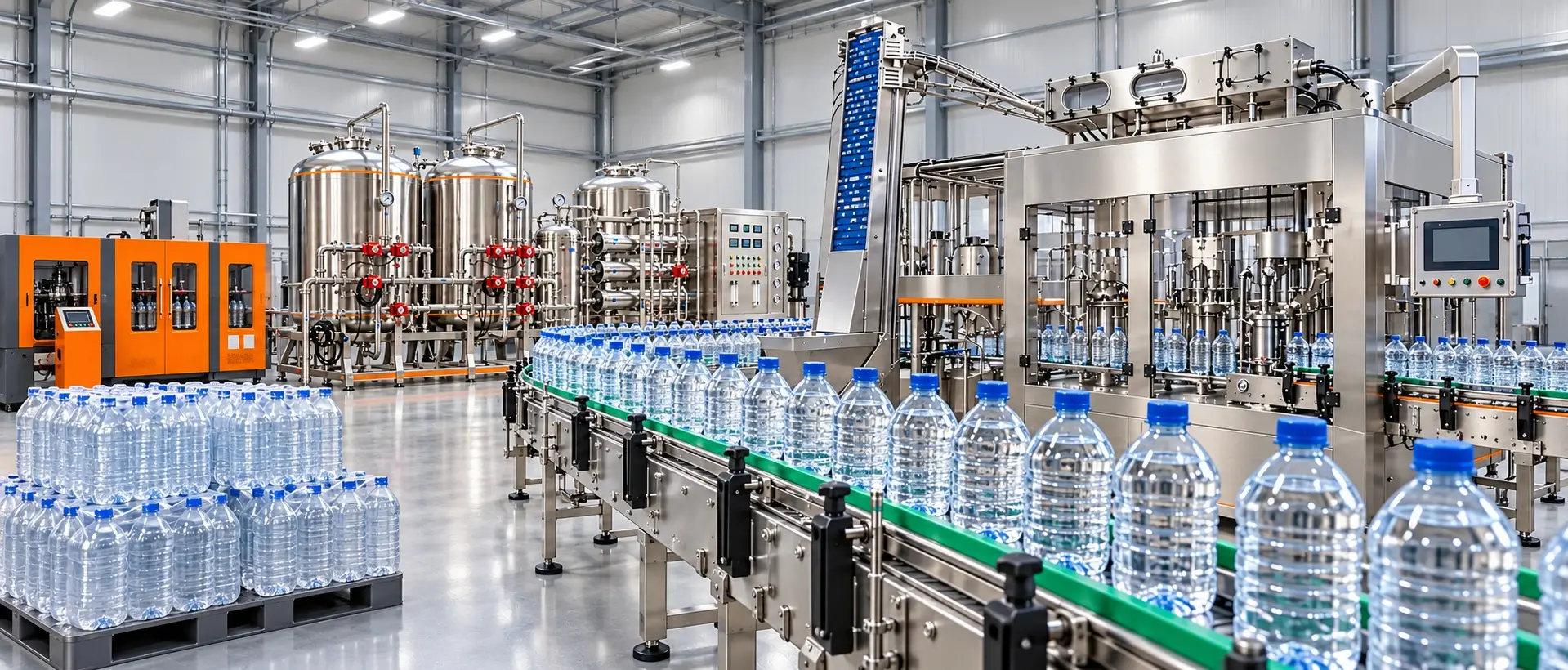
Bottled-water line options
Choose your line: 30, 60, 90 or 120 BPM.
A practical starting range for new bottled-water projects and for expanding an existing plant. The specialist packaging machinery is sourced and integrated around your bottle format, line output and utilities.
30BPM
1,800 bottles/hr
60BPM
3,600 bottles/hr
90BPM
5,400 bottles/hr
120BPM
7,200 bottles/hr
BPM means bottles per minute. Nominal reference: 1,000 ml PET water bottles. Actual output depends on bottle design, selected configuration, line efficiency and operating conditions. The 30–120 BPM range relates to the agreed bottle format.
Filling systems
Synchronised rotary or inline systems. Gravity, volumetric or counter-pressure filling, chosen to suit the product.
Checked as one line
Lines are customised to your product, bottle format, required speed and automation level. Bottle transport, rinsing, filling, cap supply and closure quality are checked as part of line integration.
Sized with the whole plant
BPM alone does not define the plant. From your raw-water report, pack mix, target output, working hours, building plan and utilities, we calculate treatment capacity, storage and packing speed together.
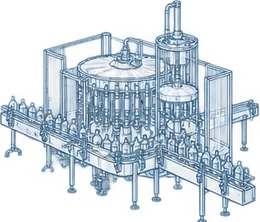
RFC machine series
Rinsing, filling and capping model range.
Automatic 3-in-1 monoblock options for packaged drinking water, still beverages and carbonated soft drinks. Each model rinses, fills and caps in one synchronised machine.
| Model | BPM* | Bottles/hr* | Rinsing heads | Filling heads | Capping heads |
|---|---|---|---|---|---|
| WRFC-30 | 30 | 1,800 | 8 | 8 | 3 |
| WRFC-60 | 60 | 3,600 | 12 | 12 | 4 |
| WRFC-90 | 90 | 5,400 | 18 | 18 | 6 |
| WRFC-120 | 120 | 7,200 | 24 | 24 | 8 |
| Model | BPM* | Bottles/hr* | Rinsing heads | Filling heads | Capping heads |
|---|---|---|---|---|---|
| JRFC-30 | 30 | 1,800 | 8 | 8 | 3 |
| JRFC-60 | 60 | 3,600 | 12 | 12 | 4 |
| JRFC-90 | 90 | 5,400 | 18 | 18 | 6 |
| JRFC-120 | 120 | 7,200 | 24 | 24 | 8 |
| Model | BPM* | Bottles/hr* | Rinsing heads | Filling heads | Capping heads |
|---|---|---|---|---|---|
| CRFC-30 | 30 | 1,800 | 8 | 8 | 3 |
| CRFC-60 | 60 | 3,600 | 12 | 12 | 4 |
| CRFC-90 | 90 | 5,400 | 18 | 18 | 6 |
| CRFC-120 | 120 | 7,200 | 24 | 24 | 8 |
* Rating basis: 1,000 ml PET water bottle. Juice and CSD outputs are proposed and require product validation. Head counts follow the supplied configuration. Actual output depends on bottle design, line efficiency and operating conditions; for juice, on viscosity, pulp and temperature; for CSD, on CO2 level, temperature and pressure.
Bottle temperature conditioning
Warming, cooling and pasteurisation tunnels.
Designed and manufactured by ARV to suit your capacity, product, container and process. Supplied with turnkey projects.
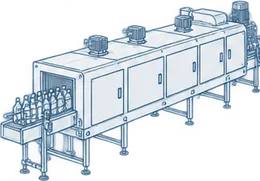
Designed and manufactured by ARV
Process matching
Line speed, bottle size and material, inlet and outlet temperatures, treatment time and available utilities guide the design, so capacity suits your production line.
In-house manufacture
Tunnel length, conveyor speed, spray zones and controls are configured for the required duty and integrated before labelling.
Three uses on a beverage line
Warming chilled soft-drink bottles
Warms cold-filled bottles to a suitable temperature for labelling. The target allows for ambient conditions and dew point to limit condensation.
Cooling hot-filled juice bottles
Cools hot-filled juice bottles towards room temperature before labelling, with a cooling profile matched to the product and bottle.
Pasteurising after filling and sealing
For products that need pasteurisation after sealing. Product-specific time and temperature settings require process validation.
Labelling and coding
Labelling machines for your bottle and label format.
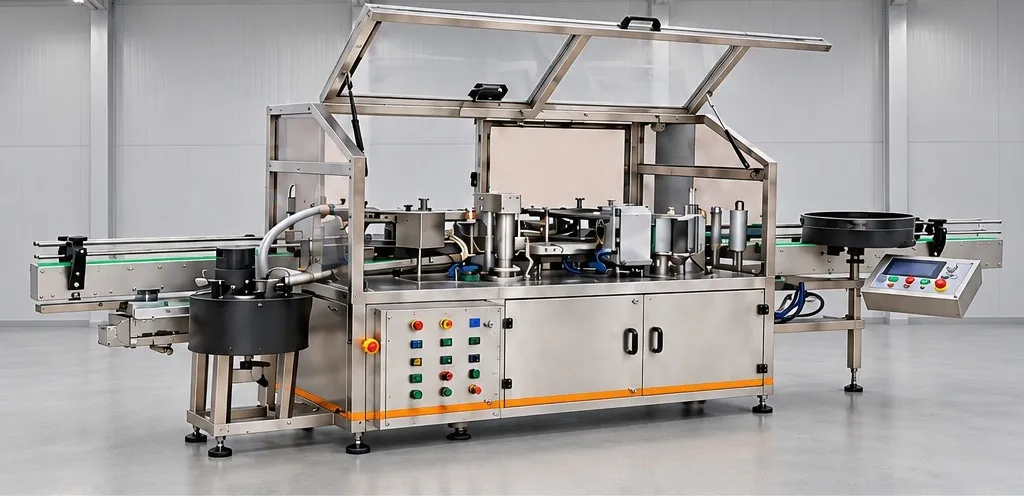
Shrink sleeve, BOPP/OPP wrap-around and self-adhesive sticker systems, selected around the bottle and the label material.
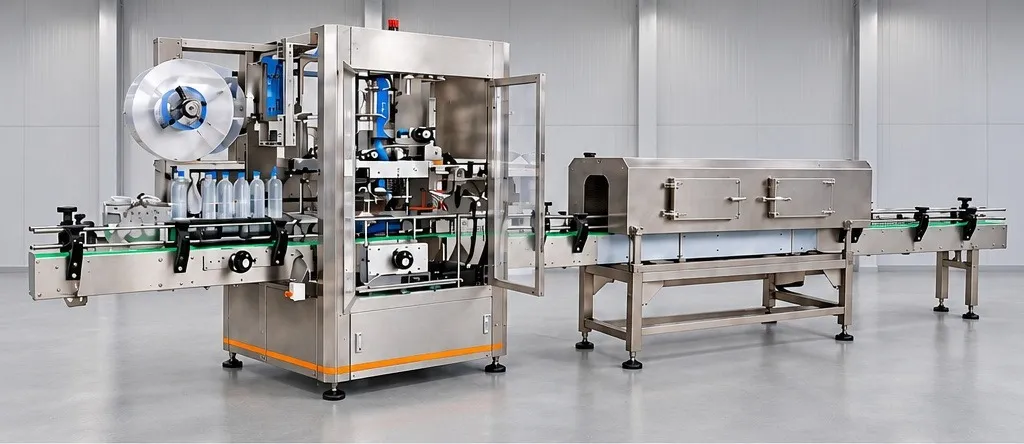
Shrink sleeve labelling
Applies sleeves to bottles, followed by an integrated shrink tunnel for bottle decoration. Suited to sleeve-based branding.
Sleeve size, bottle shape and tunnel requirements are matched to the application.
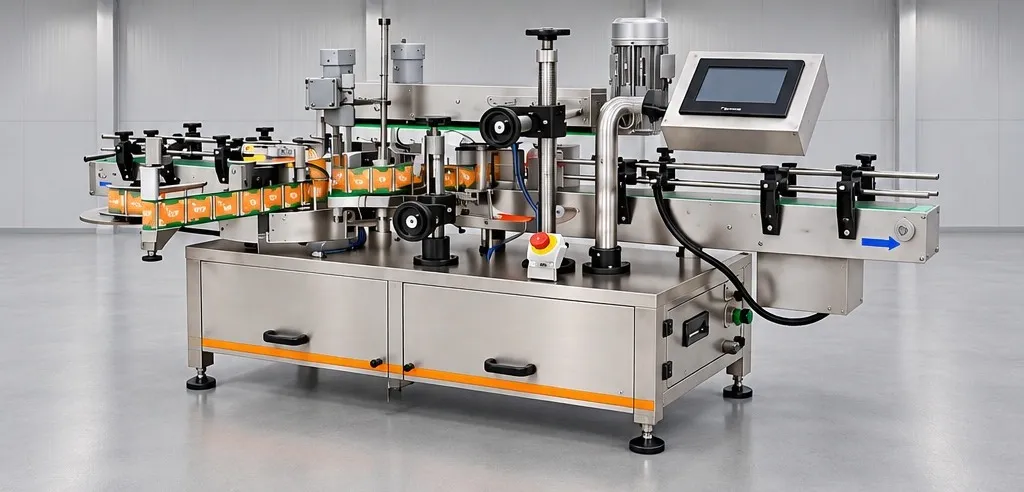
BOPP/OPP wrap-around
Wrap-around labelling with BOPP/OPP labels for compatible round bottles and containers.
Bottle diameter, label dimensions and line speed guide machine selection and changeover planning.
Sticker labelling
Self-adhesive sticker application on a single side, or front-and-back.
Single-side or double-side configuration is chosen for the container shape, label position and artwork.
Representative illustrations.
30–250 BPM
Labelling capacity range. Output depends on machine model, bottle and label specifications. Integration and configuration are matched to the production line.
Date coding and marking
Continuous inkjet or laser coders mark batch, date and manufacturing details on each bottle. Bottle drying can be added as required.
End-of-line packaging
End-of-line shrink packaging.
Shrink wrapping machines and case packers for handling, dispatch and transport, selected for dependable performance, consistent pack quality and sustained production.
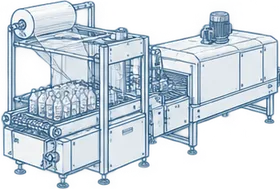
Sourced, supplied and supported by ARV
These machines are sourced from selected manufacturers, not manufactured by ARV Engineers. They are available with a complete production line or as standalone machines.
30–60 BPM lines
Manual-assisted shrink packaging
Film sleeving and heat shrinking for secure multipacks.
90–120 BPM lines
Double-film L-shaped systems
Automatic grouping, wrapping and tunnel shrinking.
120 BPM onwards
Single-film high-speed systems
Continuous inline wrapping and heat-tunnel shrinking.
5 packs/min onwards
Packs per minute depend on the model and the number of bottles in each pack, so the bottle count per pack affects the line match. System suitability is subject to pack configuration.
ARV support: after-sales service, spare parts and warranty support are provided by ARV under the agreed supply terms.
Packaging formats
Small bottles to 20 L jars. Plus cups and pouches.
Each pack format is matched to its own equipment, compatible materials and required production rate, chosen for the product category and the intended market.
PET bottles
200/250 ml · 500 ml · 1 L · 2 L
Bottle and preform design, rinsing, filling, capping, labelling, coding and secondary packing are agreed together and integrated to the selected line speed. Compatible preforms and moulds support in-house bottle production.
20 L jars and barrels
Returnable jars
For offices, homes and dispenser supply. Jars pass inspection, decapping and validated internal and external washing and rinsing before filling and capping. Damaged jars are rejected, and dirty returns and clean filling move separately in the layout.
Cup packaging
Foil or film sealed
Metered filling into compatible food-contact cups, then sealing, batch coding and secondary packing. Cup size, lid material, seal temperature and sealing time are matched, with checks on fill quantity and seal integrity.
Pouch packaging
Form-fill-seal
Measured water packs from suitable food-contact film. Pack volume, film specification, sealing jaws and temperature control are selected together, with leak checks, coding and hygienic handling.
One project plan, clearly separated outputs
The 200 ml–20 L range describes project pack options across different machines. Bottle BPM, jar output and cup or pouch output are stated separately. Water treatment covers 50–20,000 LPH, and each packaging line is sized separately around pack volume, required output, hygiene, utilities and layout. Source quality, product category and packaging requirements guide selection.
Equipment selection, installation, trials and operator training are coordinated to the agreed project scope. See PET blow moulding for in-house bottles
Packaged drinking water and natural mineral water need different assessments. Natural mineral water is source-specific, and an RO plant does not by itself produce it.
Project enquiries
Plan your filling and packing line.
Share your bottle sizes, product, target output and working hours. We match the filling, labelling, tunnel and shrink packing equipment to one line speed and send a clear technical proposal.